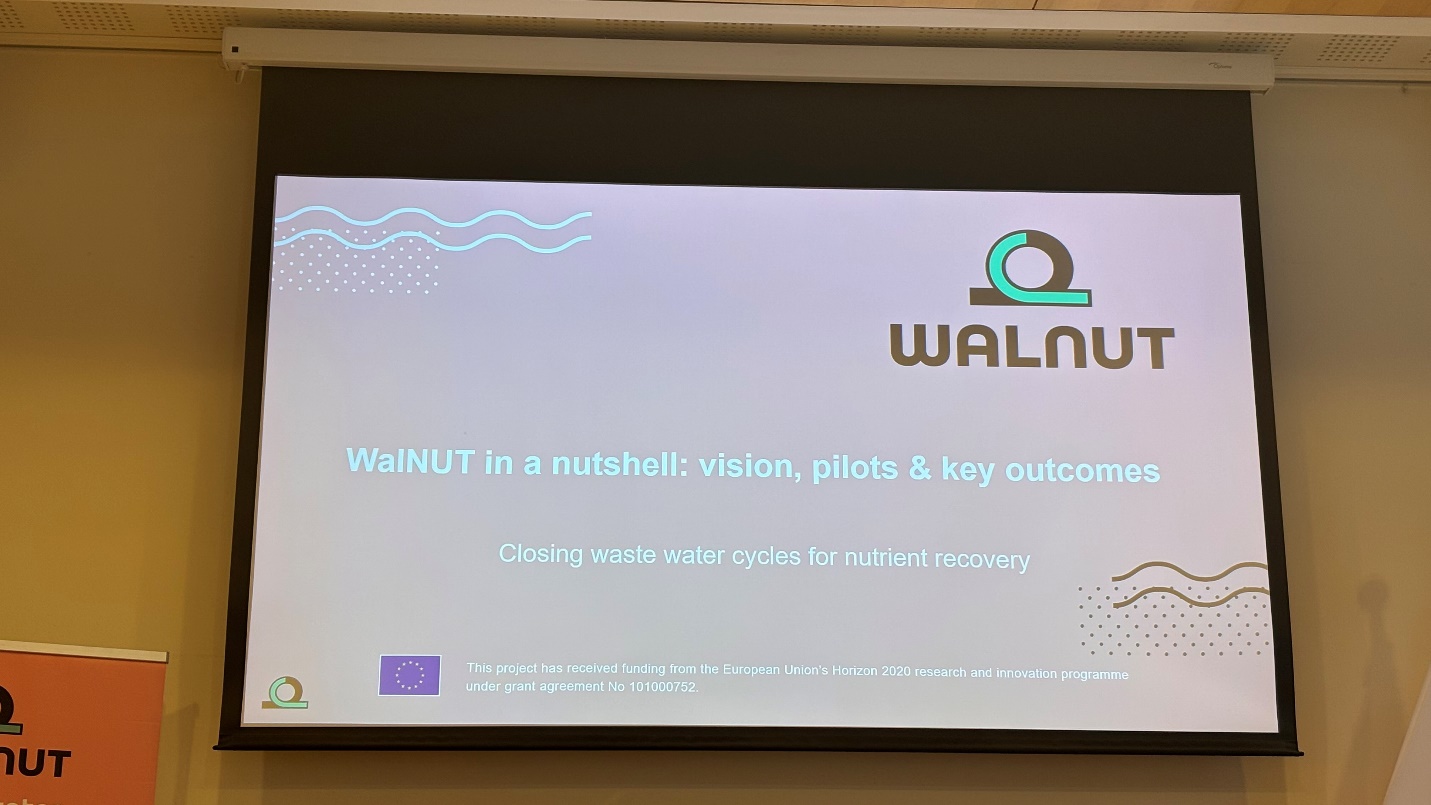
The WalNUT project “Closing wastewater cycles for nutrient recovery”, HORIZON 2020 project, has organised its final event in Brussels on 5 February 2026.
Our partner CIRCE attended the event and provided a presentation of the NENUPHAR project. It was a great opportunity to meet with various stakeholders and to raise awareness on our work, where we stand and what’s coming up.
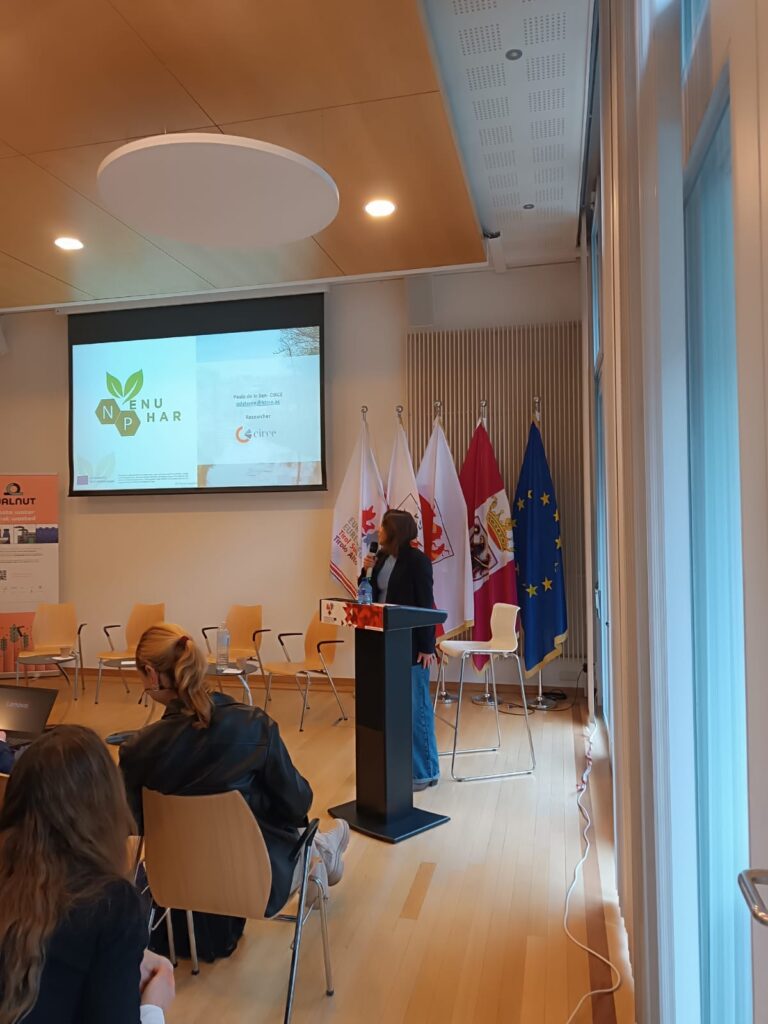
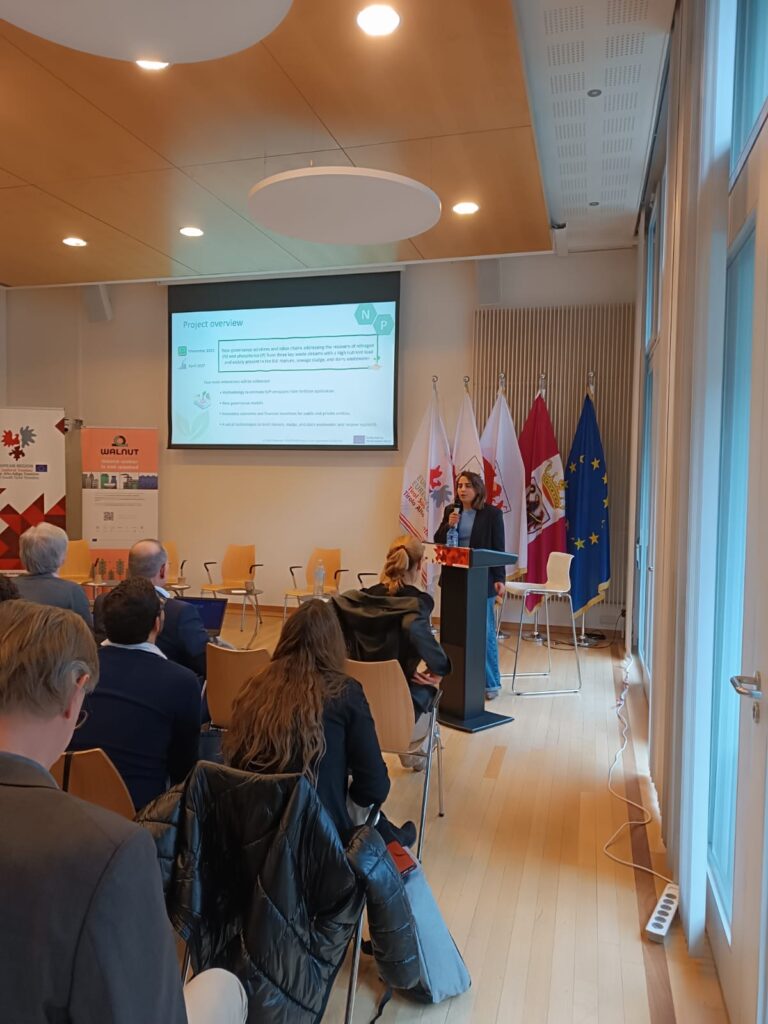
Project Overview and Context
The WalNUT project (Systemic solutions for nutrient recovery from wastewater and brines) aims to redesign nutrient value chains by recovering valuable nutrients from wastewater and saline streams, contributing to a more circular, resource-efficient and sustainable European economy.
The project focuses on nitrogen (N) and phosphorus (P) recovery from a wide range of water streams, including urban and industrial wastewater, food-processing effluents, sewage sludge, and desalination brines. A key driver behind WalNUT is the need to address regional nutrient imbalances, reduce dependency on imported mineral fertilisers, and support sustainable agricultural practices.
WalNUT combines technological development, environmental and socio-economic assessment, and policy analysis, with strong alignment to the EU Green Deal, the Circular Economy Action Plan, and the evolving Urban Wastewater Treatment Directive (UWWTD).
Technologies developed and demonstrated within the project span different levels of maturity, from early-stage solutions (TRL 2–3) to pilot-scale validation (up to TRL 5), with a strong emphasis on scalability, environmental performance, and real operational conditions.
WalNUT Pilots: Demonstration Sites and Objectives
The project includes five demonstration pilots across Europe, designed to reflect diverse wastewater typologies, regulatory contexts, and regional nutrient challenges. These pilots serve as real-life testbeds for nutrient recovery technologies and business models:
- Spain (Central region) Industrial wastewater (VEOLIA):
Focused on the recovery of nitrogen and phosphorus from industrial effluents, assessing technical feasibility and integration within existing treatment infrastructures. - Belgium Municipal wastewater:
Demonstration under real urban wastewater conditions, targeting the recovery of nitrogen and phosphorus while ensuring regulatory compliance and operational robustness. - Hungary Dairy wastewater (3R BioPhosphate Ltd.):
Treatment of agro-industrial wastewater, aiming to recover nitrogen, phosphorus and additional nutrients, with a strong link to fertiliser production and agricultural reuse. - Greece Seawater desalination brines:
Addressing nutrient recovery from high-salinity brine streams, exploring solutions for challenging matrices typically considered waste streams. - Northern Spain Municipal/industrial context (Cetaqua):
Focused on the selective recovery of nitrogen, exploring targeted recovery approaches and their integration into existing water treatment systems.
Together, these pilots provide a comprehensive overview of technical, economic, and regulatory challenges associated with nutrient recovery across Europe, while generating evidence to support future upscaling and policy uptake.
Policy and Regulatory Framework: Urban Wastewater Treatment Directive (UWWTD)
The revision and implementation of the Urban Wastewater Treatment Directive (UWWTD) was a central topic of discussion, with a roundtable discussion on the subject.
- Infrastructure readiness varies significantly depending on country and treatment focus.
- Micropollutant removal was identified as one of the main technical and financial challenges.
- In regions such as Catalonia, nutrient removal is not a major issue, while nutrient recovery remains challenging.
- Key barriers include plant size, space availability, and administrative procedures required to deploy new technologies.
- Similar space constraints were reported in France.
- In Spain, facilities are often technically prepared, but nutrient removal targets are not always achieved, due to limitations related to space, investment capacity, or prioritisation.
- The lack of compliance may result in penalties, which could act as a driver for stricter implementation.
A paradigm shift was highlighted: while the Directive focuses on compliance, resource recovery is mostly recommended rather than mandatory, limiting its uptake by utilities, SMEs, and public authorities.
Technical Challenges and Operational Strategies
Several strategies to improve efficiency and feasibility of nutrient recovery were discussed:
- Selection of context-appropriate technologies, supported by Life Cycle Assessment (LCA) to evaluate environmental and energy impacts.
- Energy consumption remains a critical issue across solutions.
- Integration of renewable energy to move towards climate neutrality.
- Biogas production and energy recovery, particularly relevant in Catalonia.
- Nature-based solutions (NBS) as promising low-energy options, though space requirements remain a constraint.
- Sewage sludge identified as one of the most challenging streams for inclusion in codigestion processes.
- Treatment of sidestreams as an efficient way to reduce nutrient loads with relatively small interventions.
- Use of digitalisation, automation and AI to optimise processes and reduce energy demand.
- Biological and bacterial processes highlighted for their lower energy consumption.
- The importance of process monitoring and optimisation in both small- and large-scale systems.
- Technology Maturity and Deployment
Regarding technology readiness and upscaling:
- A minimum of TRL 7 is considered necessary to reduce investment risk.
- TRL 8 is preferable to avoid results based on assumptions rather than operational data.
- It was widely agreed that technology itself is not the main bottleneck; instead, challenges relate to economic feasibility, regulatory constraints, and market conditions.
- The need for flagship demonstration projects was highlighted.
- Strong collaboration between research institutions and water utilities/companies is essential to test solutions under real conditions.
- Economic, Market and Social Aspects
Key non-technical barriers were emphasised:
- The absence of a well-defined market for recovered nutrients is a major limitation.
- Identifying clear benefits and end-users is essential for economic viability.
- Social acceptance varies significantly between countries.
- The regulatory landscape is fragmented, with multiple regulations, different definitions, and sometimes contradictory requirements.
- The final product format (e.g. fertiliser type and usability) plays a critical role in market uptake.
- Results, Impact and Lessons Learned
Several key lessons emerged from the project experience:
- It is essential to test fertilisers under different climatic conditions, as products designed for specific regions may not perform or be accepted elsewhere.
- Data availability and quality remain a challenge for robust sustainability assessments.
- For wastewater treatment plants, regulatory compliance often outweighs market considerations, especially if a technology solves an operational or legal problem.
- The variability of waste streams (concentration, temperature, pH) strongly affects process performance and outcomes.
- More operational time is needed to better understand biofertiliser stability, storage, and behaviour under different conditions.
- Engaging all actors along the value chain from early stages is critical for successful deployment.
The results and deliverables of WalNUT will continue to be available on CORDIS.