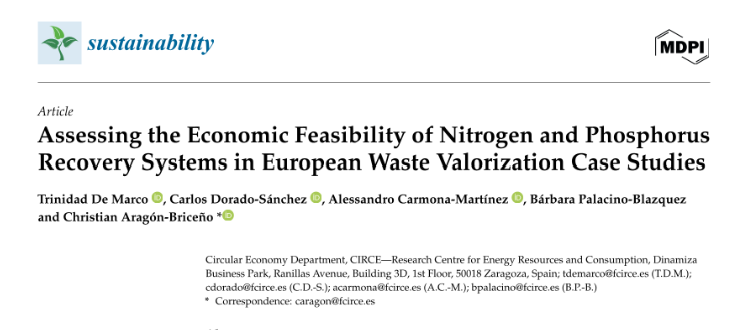
A recent scientific study Assessing the Economic Feasibility of Nitrogen and Phosphorus Recovery Systems in European Waste Valorization Case Studies published under the NENUPHAR project explores how nutrient recovery technologies can help transform waste streams into valuable resources, supporting the transition towards more circular and sustainable agri-food systems. Drawing on case studies from across Europe, the publication examines five nutrient recovery systems, including approaches based on sewage sludge, digestate treatment, dairy wastewater, and algae-based technologies.
The research brings together experiences from demonstration and innovation activities in Spain, Latvia, Lithuania, Hungary, Slovakia, and Denmark, showcasing a range of solutions for recovering key nutrients such as nitrogen and phosphorus from waste and wastewater streams. The findings highlight the potential of these technologies to reduce nutrient losses, improve resource efficiency, and decrease dependence on conventional fertilisers, while contributing to cleaner water and healthier ecosystems.
Importantly, the study goes beyond the technical aspects of nutrient recovery to examine the broader conditions needed for successful deployment and scaling. It identifies the importance of supportive governance frameworks, stakeholder engagement, market development, and enabling policies in accelerating the uptake of circular nutrient management solutions.
By combining insights from multiple European case studies, the publication demonstrates how nutrient recovery can contribute to more resilient and sustainable agricultural systems. The study also reflects NENUPHAR’s broader mission of bridging research, innovation, policy, and practice, helping to create the conditions needed for the wider adoption of circular nutrient management approaches across Europe.