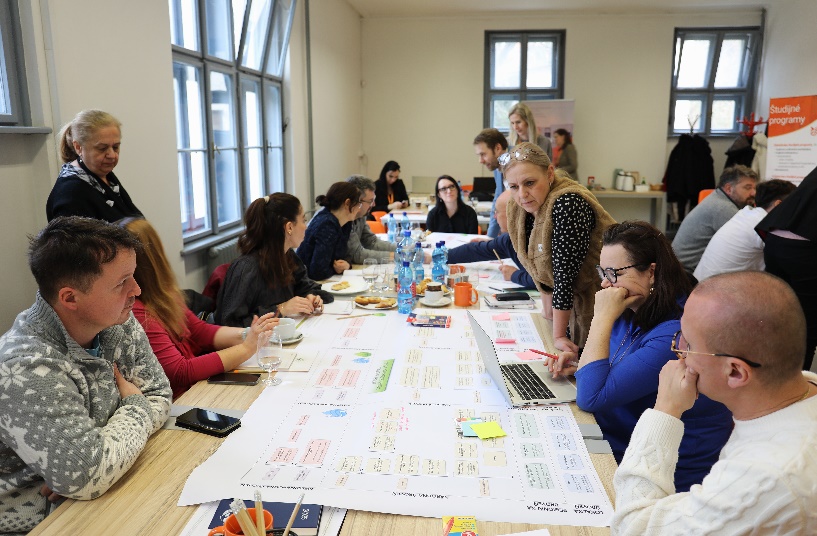
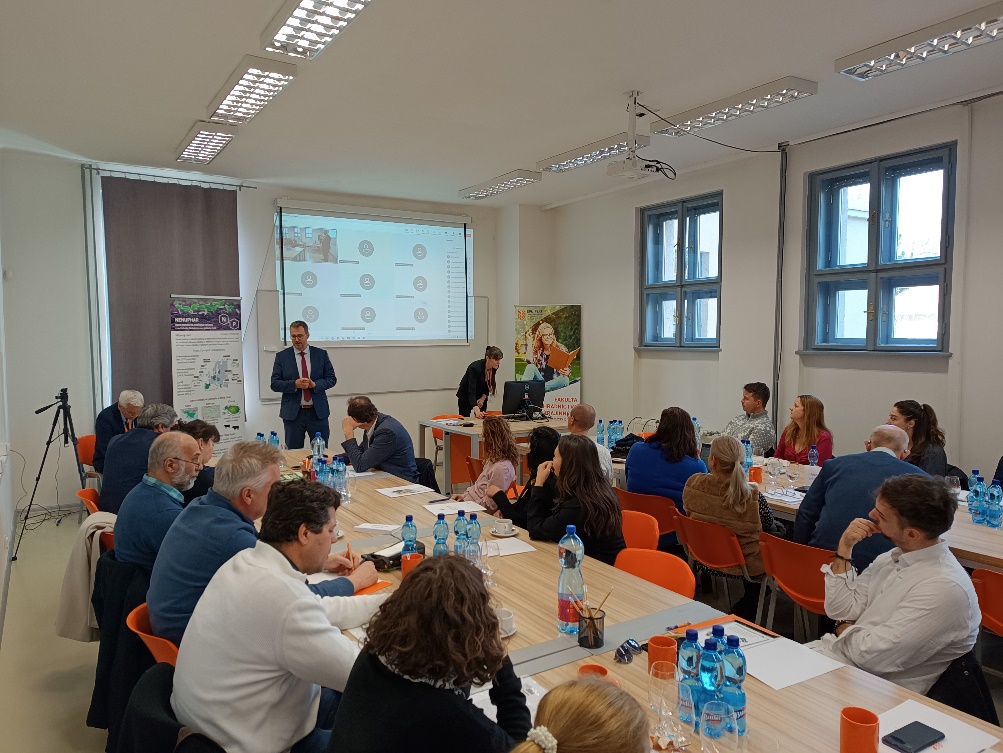
On February 21, 2025 a hybrid workshop titled “National and regional possibilities of recycling nutrients from dairy production, wastewater and sludge” took place at the Institute of Landscape Engineering, Slovak University of Agriculture in Nitra (SUA). The main aim of this event was to bring together researchers, industry representatives, policy makers and society representatives in Slovakia with interest in the NENUPHAR project and its activities.
The workshop was opened by Professor Pavol Findura, Vice-Rector of SUA and Director of the University Farm, s. r. o., Kolíňany (SUA-UF), which is an affiliated entity of SUA in the NENUPHAR project.
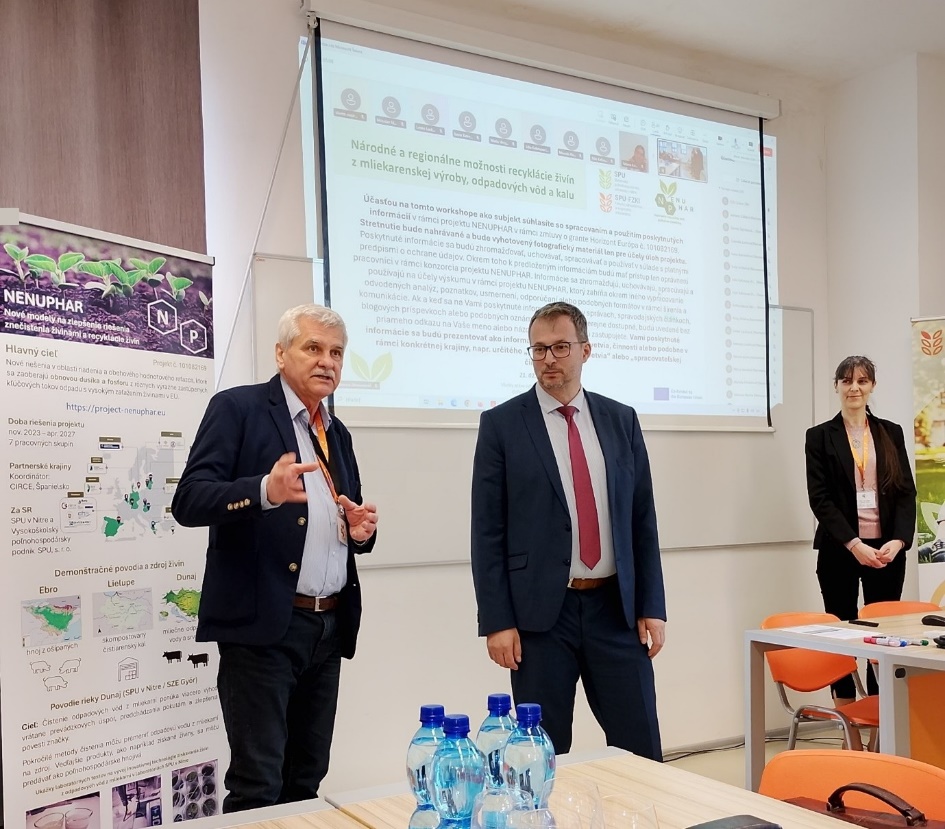
The lecture block included two lectures:
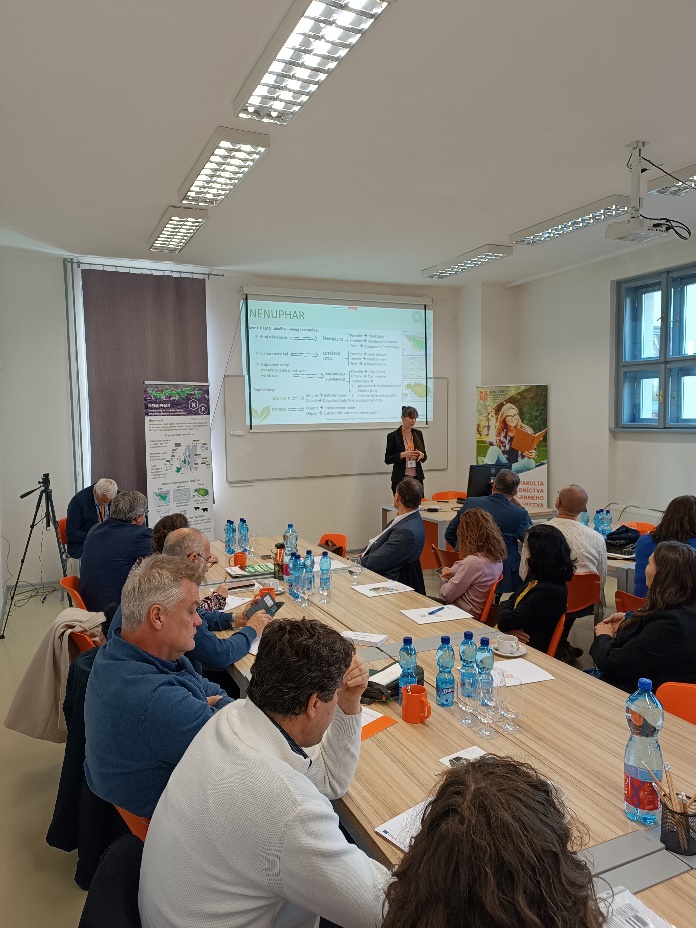
1) Introduction to NENUPHAR (introduction of project partners, demo sites, main aim, current activities, brief description of deliverables and the purpose of CoM (SUA in Nitra, Assoc. Prof. Elena Aydin)
2) National and regional opportunities for recycling nutrients from dairy production, wastewater and sludge (the need and opportunities for nutrient recycling from waste sources, the technology of dairy wastewater treatment for N and P recovery currently under development at SUA, inclusion of wastewater treatment with algae within the new Circular Economy Action Plan, organic fertilisers, wastewater from dairy processing, sewage sludge and barriers for organic fertilizer implementation) (SUA in Nitra, Ľuboš Jurík).
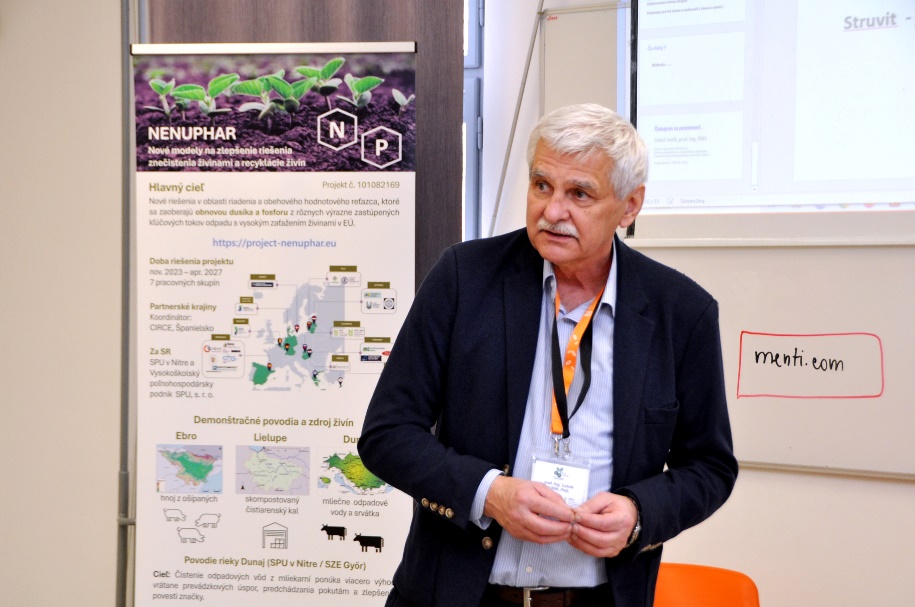
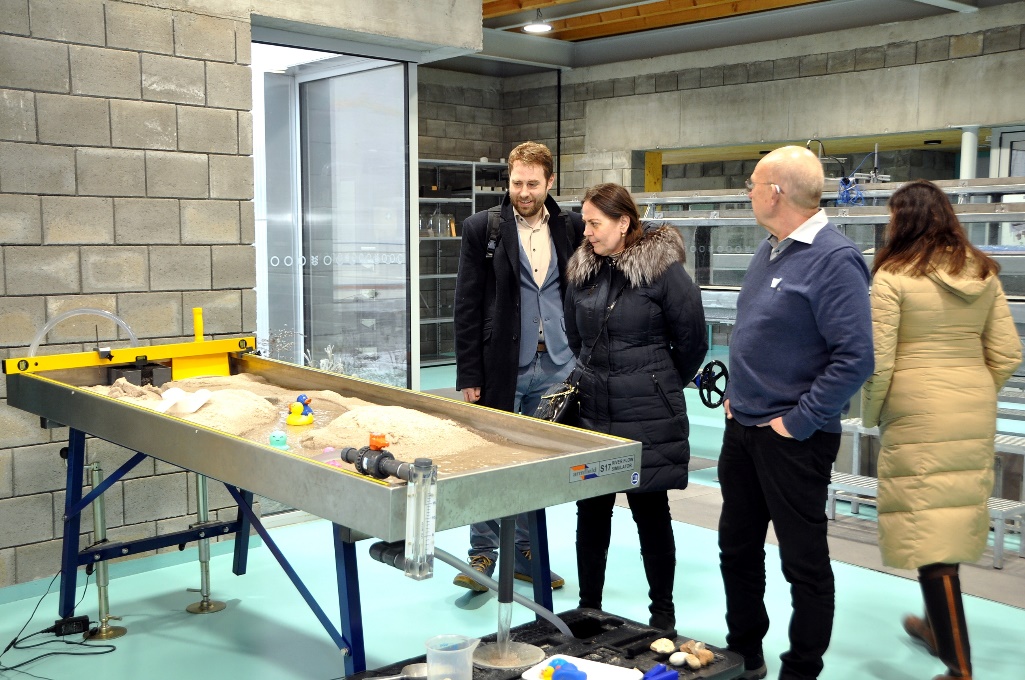
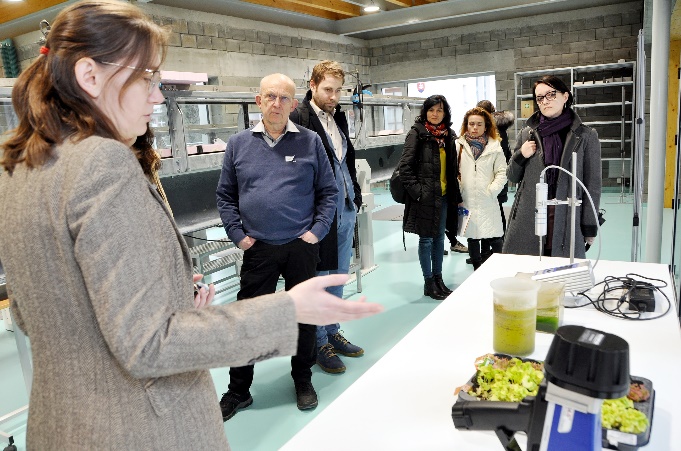
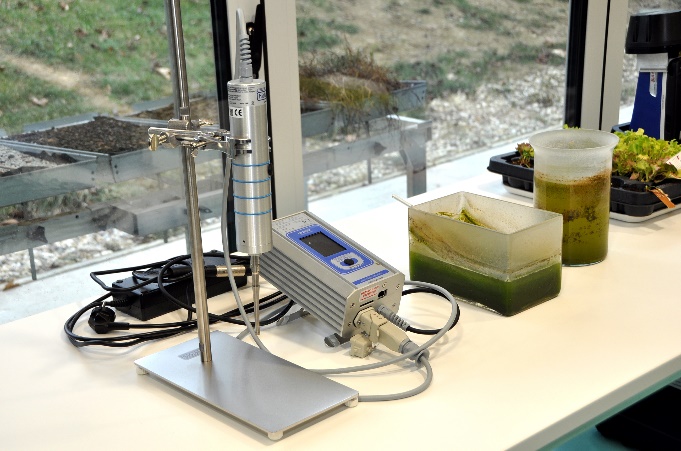
During online registration prior the event, participants specified their field of interest and assigned themselves to one of the discussion tables. Discussion Table 1 consisted of stakeholders from different sectors focused primarily on water resources, wastewater production, wastewater treatment and monitoring of the water quality. The second discussion table consisted of stakeholders focused more on nutrient transport and its monitoring, fertilizer production and circular economy. After a short introduction of the participatory activities by the organizers they worked within groups on several sub-tasks. They reviewed and commented on the preliminary governance structure of water and nutrients in Slovakia, assessed the strength of their communication with other sectors, identified problems in the current governance system and made suggestions for the structure’s improvement. After the common discussion summarizing the main outcomes of the meeting aimed especially at regulatory barriers in the field of nutrient cycling and the current state of wastewater treatment in Slovakia, the participants visited the newly established Environmental Centre of SUA in Nitra. There they could see a brief demonstration of nature-based technology of nutrient recovery from dairy wastewater currently under development within T3.4.4. This cutting-edge technology for dairy wastewater treatment uses algae to capture and recycle nutrients. The aim is to provide alternative organic fertilizer containing the nutrients from wastewater to reduce costs and enhance crop production quality.
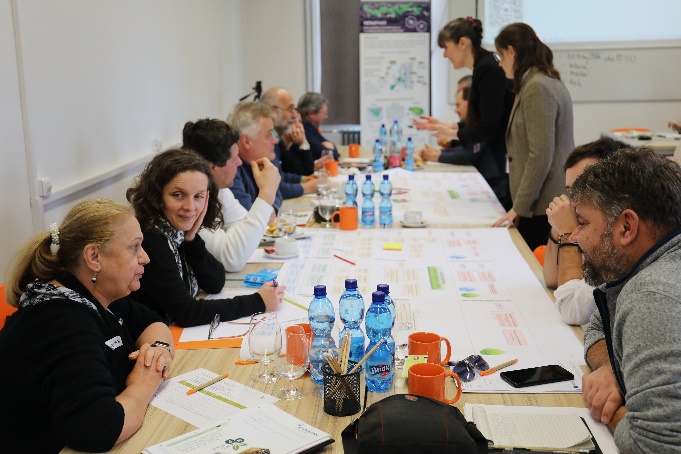
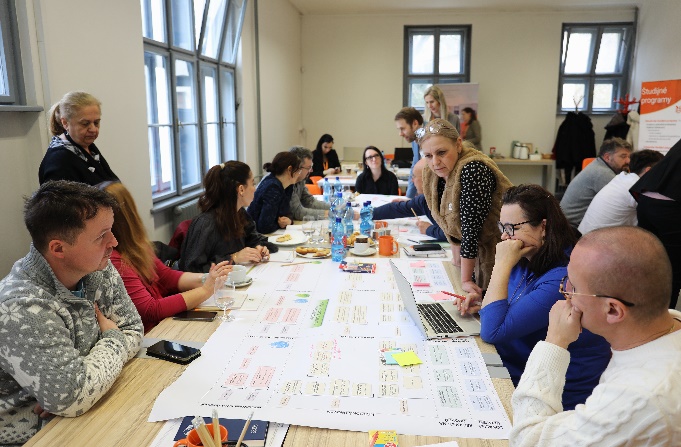
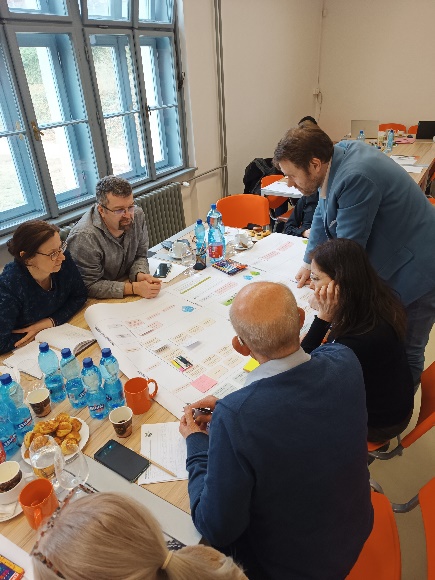
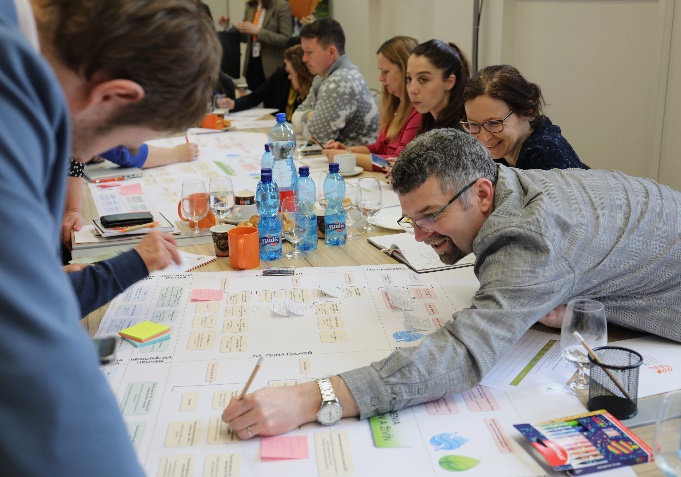
In total, 67 participants from different sectors took part in the event’s activities both in person and online. The most represented organisations within public sector were the Slovak Environmental Inspectorate, the Central Controlling and Testing Institute in Agriculture and the Slovak Hydrometeorological Institute. There were representatives from the Ministry of Environment of the Slovak Republic and the Ministry of Agriculture and Rural Development of the Slovak Republic, the Slovak Environment Agency, Hydromelioration and Regional District Office and Slovak Centre of Scientific and Technical Information. Academia and research were mainly represented by the members of the Slovak University of Agriculture and Institute of Hydrology of the Slovak Academy of Sciences. The private sector represented dairy producers (Agro Tami, a. s., LEVICKÉ MLIEKÁRNE, a. s. and MILSY a.s.), organic fertilizer producers and agricultural technology companies. Slovak Society of Chemical Engineering and the Association of Organic Fertiliser Producers were representing the civil society sector.
𝗞𝗲𝘆 𝗶𝗻𝘀𝗶𝗴𝗵𝘁𝘀 𝗶𝗻𝗰𝗹𝘂𝗱𝗲𝗱:
- Utilizing nutrients from dairy wastewater as potential organic fertilisers, promoting sustainable agricultural practices.
- Engaging in discussions about the governance framework of water and nutrient management in Slovakia.
- Collaborating across sectors to identify barriers and propose solutions for effective nutrient recycling.
𝗡𝗼𝘁𝗮𝗯𝗹𝗲 𝗼𝘂𝘁𝗰𝗼𝗺𝗲𝘀: - Valuable stakeholder feedback on project goals and governance structure.
- Insights into improving communication between sectors.
- Identifying barriers in environmental, economic, social, and technological contexts.
The Slovak session of the CoM provided valuable early feedback on both the project and its proposed governance structure. The workshop was designed to engage participants in an in-depth exploration of water and nutrient management in the Slovak part of the Danube River Basin (DRB), and it successfully gathered a wide range of perspectives through a mix of in-person and online activities.